
Will AI replace us and take our jobs? This is one of the most prevalent concerns since the initial release from OpenAI in 2022. Companies have explored using AI to improve efficiency in the workplace, and it can be argued that some companies have downsized their workforce as a result of increased efficiency.
However, while it could potentially increase efficiency for companies, there is a limit to the infiltration of AI in the workforce. Here are 3 reasons why teachers and professors are safe from AI:
AI can never overcome the uncanny curve (Uncanny Valley)
Can you imagine having a robot as a teacher, responsible for your growth and placement as you graduate? This is an uncomfortable thought. The Uncanny Valley is a concept that explores this exact discomfort.
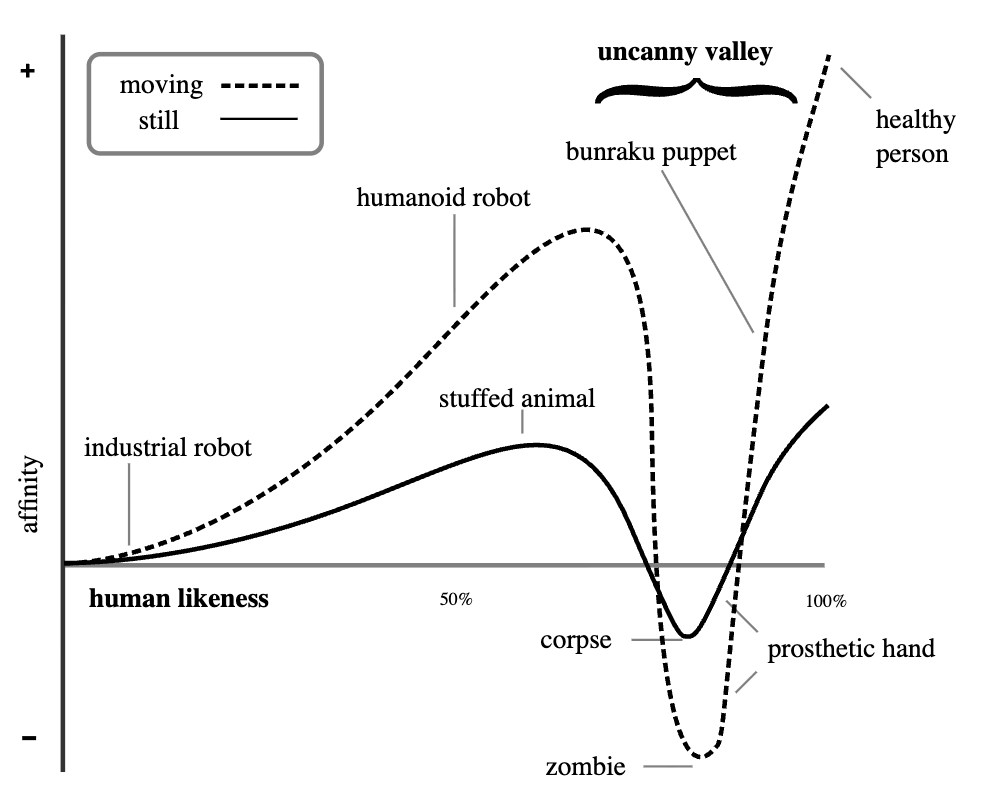
The idea of the “Uncanny Valley” states that human like robots can be fun, but as they get closer to being more human-like, they become increasingly unsettling and uninviting. Robots or AI in any human facing role, are limited by this.
Applications for AI are continuously being explored, and new models from Anthropic, Google, xAI and more, enable AI to respond as a human might. However AI models are inherently and obviously not human. For any professional job that requires personal interactions, this distinction becomes distracting and not feasible.
Due to this limitation, AI will not be successful in roles like teachers or doctors for example.
AI challenges with the scope of responsibility
Teachers have a lot on their plate. Beyond the need to be well versed in their subject matter, teachers take on the responsibility for their students’ success. At times, the role correlates with other fields such as psychology, behavioral correction, public speaking, and even UI design for coursework. If artificial intelligence were to perform the function of a teacher it would require a breadth of expertise, which is not yet possible for AI alone.
Teachers are in a unique position from an observation standpoint, to be able to observe and track factors that can lead to student success. Teachers must be able to identify improvement opportunities outside of the subject material, such as environmental distractions, behavioral issues, and unique learner needs.
Even with technology advancements, AI could not be positioned to adequately identify such humanistic needs or learner environment requirements for their students, primarily because this requires a more personal relationship with students and parents.
AI in the workplace and community backlash
Community backlash will likely prevent AI from ever displacing people in these types of public facing positions. It is the opinion of the CurriculumEngine.ai team, that there should be policies and legislation in place to prevent AI from being used to perform job functions that are public facing, or require interpersonal exchanges; jobs that potentially have direct impacts on people’s lives and futures. Such legislation is being discussed in local and state governments around the world today.
How will AI change the job of teachers and professors
Ai has already been introduced as a productivity tool with great success in the corporate world, and academia will be no different. AI can be used for tedious tasks such as data entry. AI is proficient at these sorts of tasks, which can free up teachers to focus more on the interpersonal relationships, projects, and areas of meaningful impact. AI can also be used for QA (quality analysis) of documents and correspondence to students and teachers.
And finally, tools like CurriculumEngine.ai can be extremely powerful, in providing learning materials and rich presentations that are specific to the grade level, curriculum set, and unit section. Teachers can use AI generated materials from CurriculumEngine.ai to simply get new ideas and perspectives on subject matter, or in a more directly applicable way, as a starting draft for their own lesson plans.